


Here’s a fun little fact. In 2021: out of the reported 3.57 million skydives made, only 721 had to use their reserve parachute. In other words, the odds of a skydiver needing to use their reserve parachute are approximately 1 in 5,000.
Now, what if I was to tell you “Hey, just jump without your reserve?” Would you do it? I think the answer will be a resounding “No!” quite soundly. Why is that?
Disaster only needs to strike once and all is lost. Now I say all this because your WordPress website's security rests on a similar balance.
"Around 13000 WordPress sites are hacked daily!"
So its evident that the risks are at all time high. Cyber threats continuously evolving. And hackers are constantly finding new ways to breach securities.
For WordPress website owners, it is very much important to prevent unauthorized access and data breaches. The easiest solution to this is two factor authentication (2FA).
Today, I'll share a guide on how to activate two factor authentication (2FA) for WordPress.
What is Two Factor Authentication for WordPress Admin?
Two-factor authentication (2FA) is a additional security measure. It requires a second form of identification to log in. The first is with your credentials. The second is an unique code sent to your phone or generated by an authenticator app.
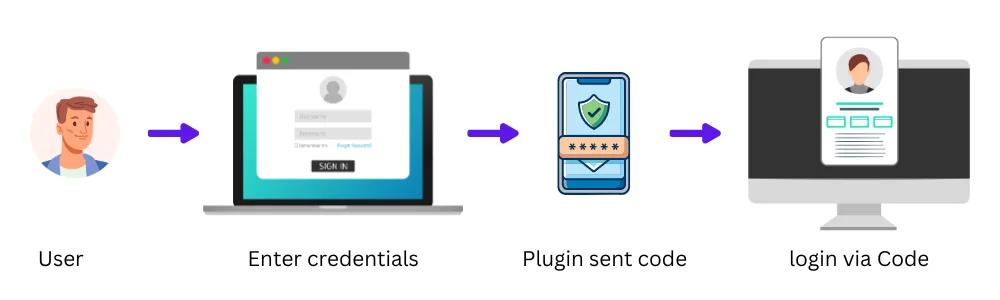
When you log in to your WordPress admin, you enter your password first. Then, you're asked for the second form of ID. And this is the two factor authentication or 2FA in short.
This extra step make sure that even if someone steals your password, they can't access your site. This makes sure that your WordPress admin better secured.
How to Activate Two-Factor Authentication in WordPress
Here's how to activate two factor authentication in WordPress.
Choose a 2FA Plugin
First, you need to select a 2FA plugin. Some popular options are:
You can get from the WordPress plugin repository. For example, we'll use the Google Authenticator app.
Install and Activate the Plugin
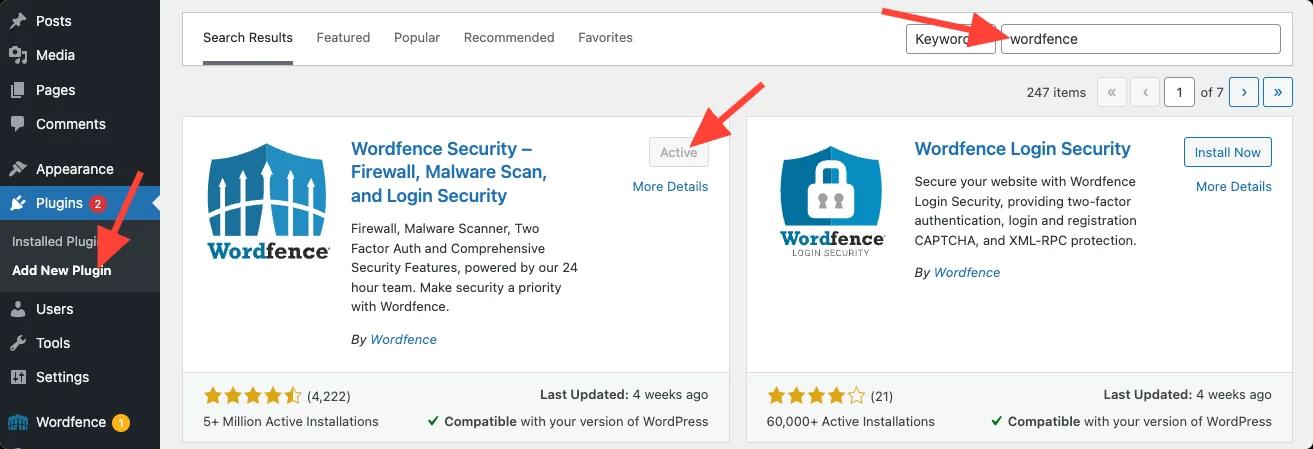
First you need to log in to your WordPress dashboard. Then, Navigate to Plugins > Add New.
Now, Search for "Wordfence". Click "Install Now". After installation, click "Activate".
Configure the Plugin
To configure the plugin:
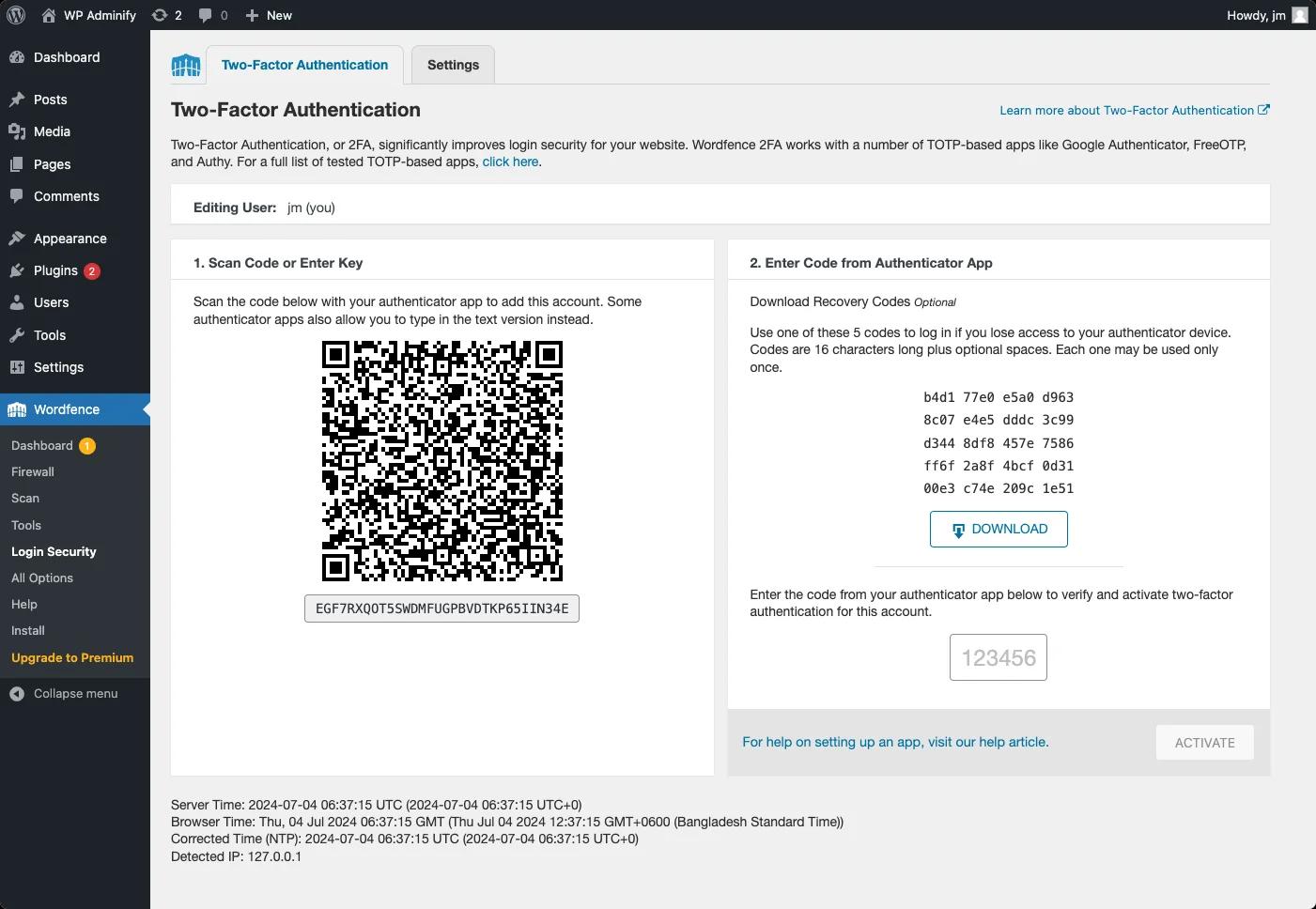
Go to Wordfence > Login security. Scan the displayed QR code with your authenticator app with your smartphone.
Open the authenticator app on your smartphone. Tap the "+" icon to add a new account.
Select "Scan a QR code" and use your phone’s camera to scan. You can see the QR code in WordPress settings.
Set Up the Authenticator App
Here's how to set up the authenticator app:
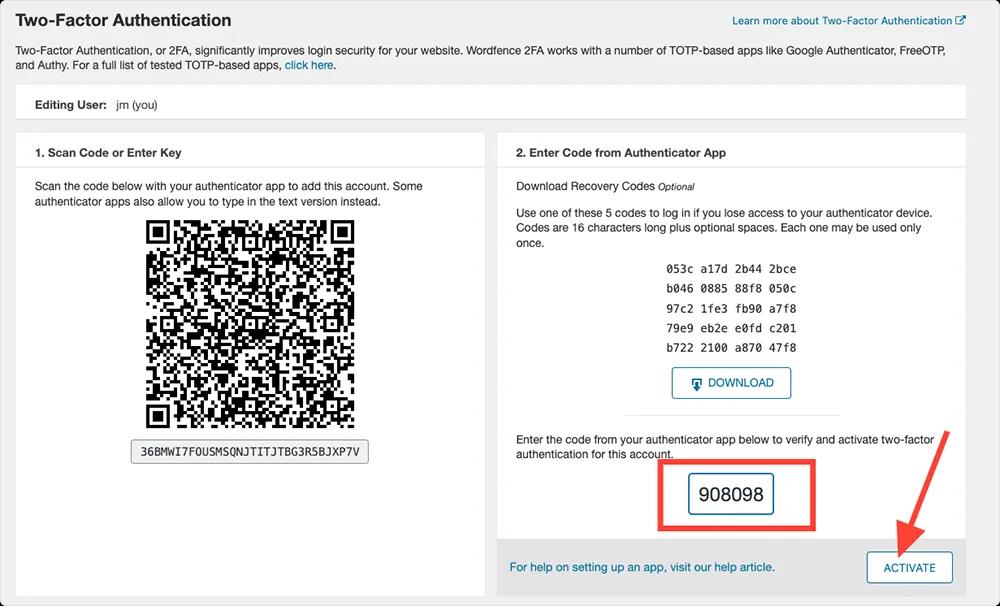
The app will generate a six-digit code. Add the code here and click on activate
Download Backup Codes
As soon as you activate the 2FA, it will provide you a option to download the backup codes.
Store these codes in a safe place. These codes can be used if you lose access to your authenticator app.

2FA Activation based on WordPress User Role
Navigate to settings. Select Required / Optional / Disabled 2FA for roles. Save the settings.

Testing the Setup
Log out of your WordPress admin. And, log back in using your username and password.
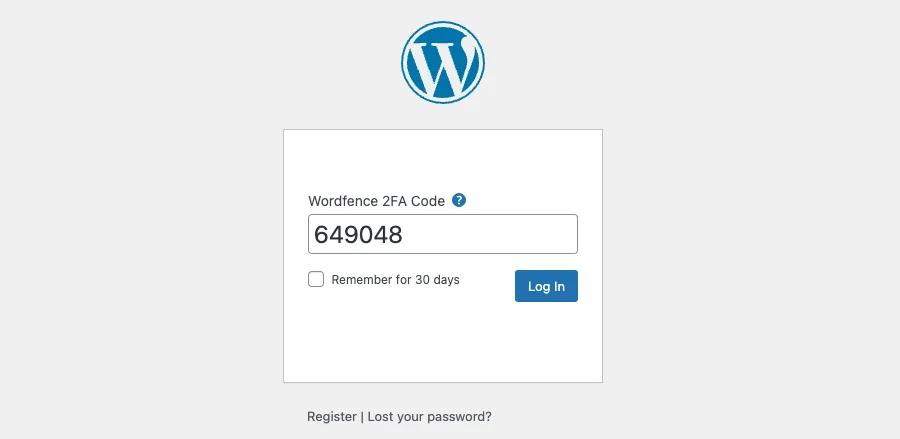
Now, you'll need to enter the six-digit code from your authenticator app. Enter the code and click "Log In".
Enhance Security with Custom Login URL (Optional)
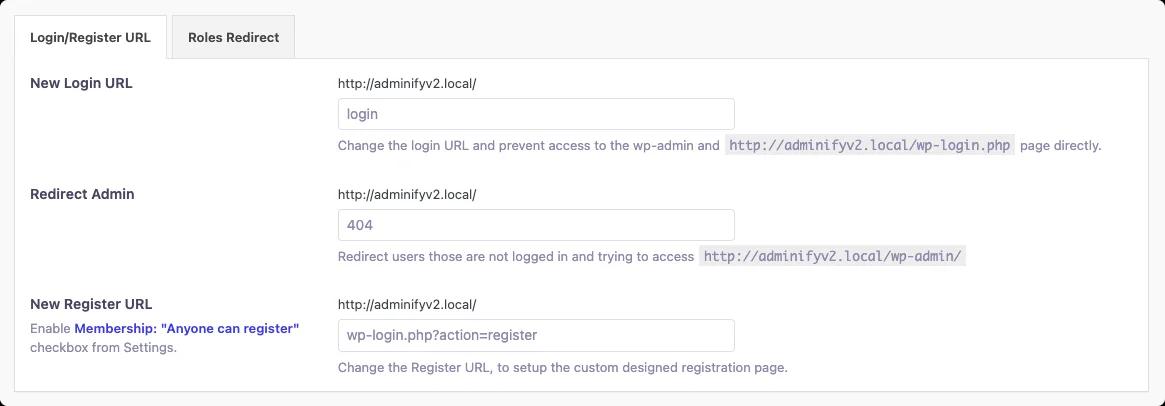
WordPress provides a secure login system. But you can add an extra layer of protection by changing the default login URL (/wp-login.php). This makes it harder for scrapers/crawlers to discover your login page.
Here's how to do that using WP Adminify's URL Redirection:
What WP Adminify Offers:
New Login URL:
Set a custom login URL (e.g., /secure-login) to replace the default /wp-admin or /wp-login.php.
Note: This changes the default login page URL.
Redirect Admin:
Redirect users access from the default admin URL (/wp-admin or /wp-admin/) to a custom page (Could be a 404 error page).
New Register URL (Optional):
You can create a unique registration page to customize the user registration process.
WP Adminify doesn't directly control user registration. But you can use other third party plugins for that. Then, set a custom URL for your registration page using WP Adminify.
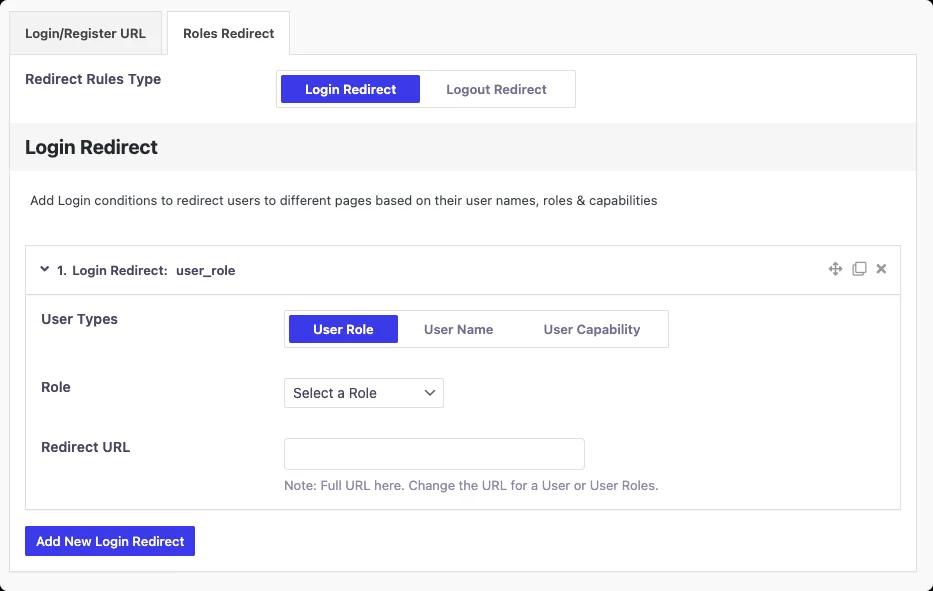
Login Redirect:
Control where logged-in users with specific roles or usernames get redirected after logging in.
Logout Redirect:
Control where users are sent after logging out, depending on their roles or usernames.
Recommendation
Since you’re already down the rabbit hole of security, there’s an extra level beyond 2FA you can go to ensure ultimate protection. This one’s a bit subtle so bear with us.
How can a robber rob a safe if the safe doesn’t look like a safe? Think of cheesy money heist movies. The safes are always hidden in plain sight: behind a painting, or behind a bookshelf. What do we learn from this? You can’t steal from or break into something you can’t see.
In terms of WordPress login pages, they are pretty easy to spot. They stick out like a sore thumb. What if we could change that?
Well with Loginfy, you can.
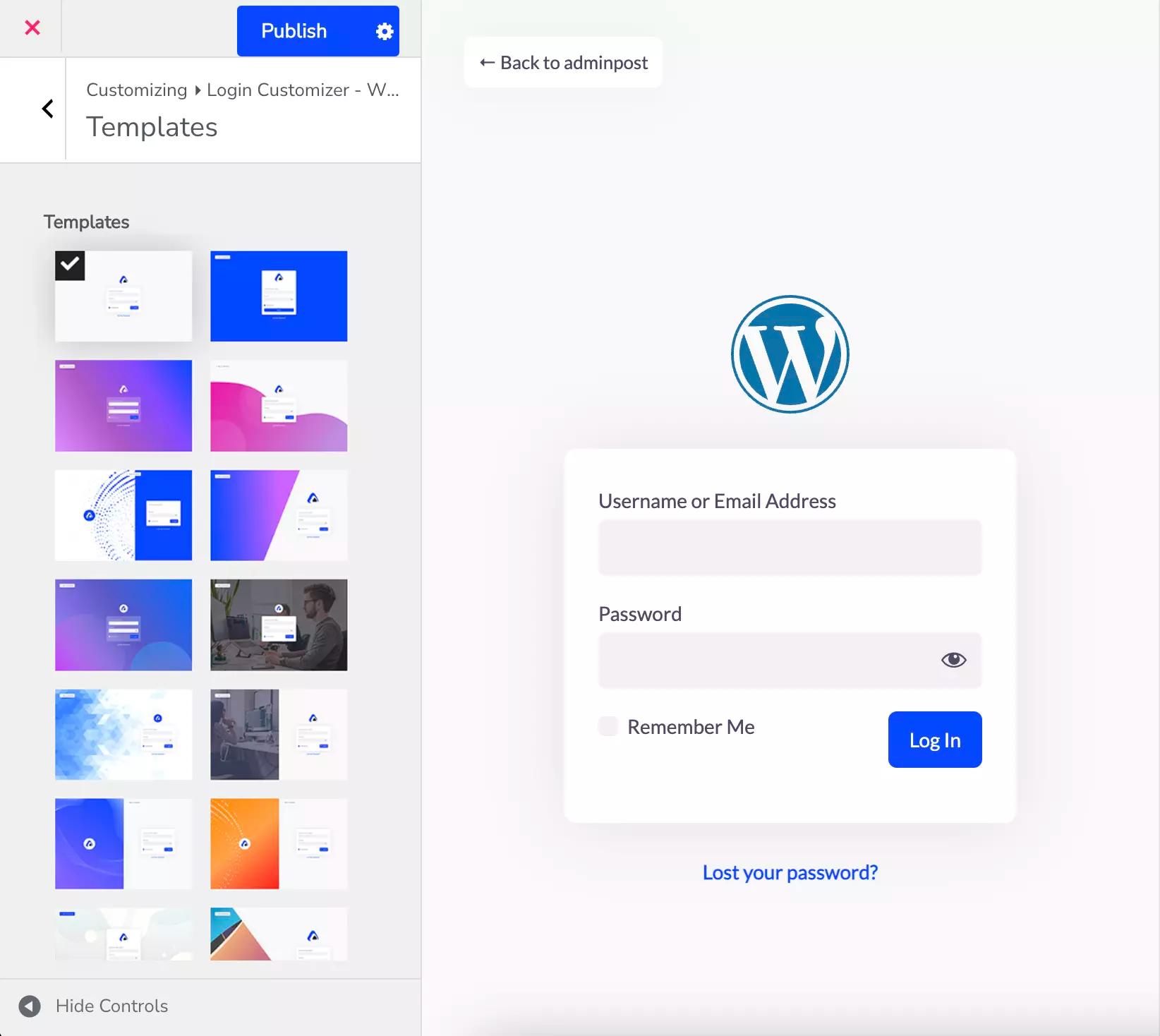
Loginfy is a WordPress plugin that lets you completely customize the look of your login page so that it doesn’t look like a typical WordPress login page. Hackers and malicious third parties will usually ignore custom-looking login pages because they are harder to break into. Loginfy lets you:
- Change logos, backgrounds, forms, and buttons for a perfect design.
- Live preview ensures a flawless login page before publishing.
- Extensive color & typography options for perfect brand alignment.
- Advanced features like custom CSS & Javascript for unique login pages.
- Improve security & user experience with options to hide features.
Two-factor authentication hardens the login, and a custom login screen closes the loop. Pair 2FA with a branded, harder-to-spot sign-in page using our WordPress login page customization guide.
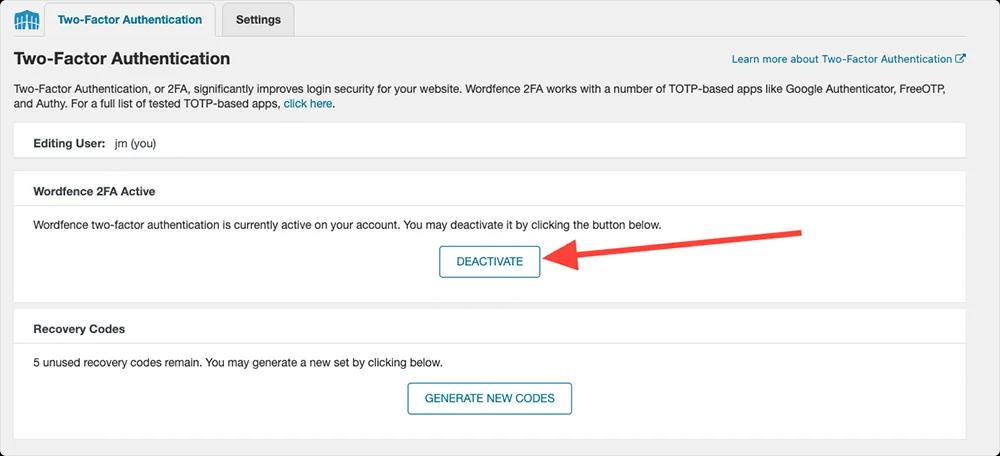
How do I disable 2FA for WordPress?
Log in to your WordPress admin dashboard. Go to WordFence >Login Security (or your chosen plugin).
You will get a button called "Deactivate" inside "Two-Factor Authentication". Just click on this button and confirm deactivation.
How do I reset my 2FA on WordPress?
Log in using a backup code if you have one. Go to Settings > Google Authenticator (or your chosen plugin).
Scan a new QR code with your new authenticator app.
If you don’t have a backup code, contact your site administrator for assistance. Otherwise, use other recovery options provided by your plugin.
How to disable the two factor authentication from single user?
Log in to your WordPress admin dashboard. Go to Users > All Users. Click on the username of the account for which you want to disable 2FA.
Scroll down to the 2FA settings section. Uncheck the box to disable 2FA for that user. Save the settings.
Does WordPress have two-factor authentication built in?
No. A default WordPress install authenticates on a username and password alone, and there is no setting anywhere in the dashboard to add a second step. Core does ship application passwords, which are separate tokens for REST API and app access, but those are about giving software limited access rather than protecting your own login. Anything resembling MFA on wp-login.php comes from a plugin.
That is worth saying plainly because a lot of teams assume it is handled. If your host offers a login shield at the edge, or your agency put a security plugin on the site two years ago, check which one is enforcing a second factor and for which roles. Half-configured 2FA (enabled on the plugin, not required for any role) is common and reads as protection when it is not.
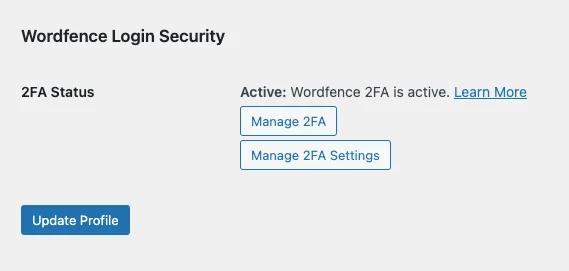
What does 2FA status mean in the WordPress users list?
Most 2FA plugins add a column to Users > All Users showing whether each account has finished enrolling. Wordfence labels it Login Security or 2FA Status, and the values are usually Active, Inactive, or Required but not yet set up. It is the fastest way to answer the question that matters after rollout: not "is the plugin on" but "who has scanned the QR code".
If that column is missing, check Screen Options at the top of the users list first, since it may just be unticked. When you want the column permanently in place, alongside things like last login or role, an admin columns editor lets you pin and reorder the columns on that screen. Reviewing enrollment monthly is a small habit that catches the account someone created in a hurry and never secured.
WordPress Admin 2FA FAQs
Which 2FA method is safest for a WordPress admin login?
An authenticator app using time-based codes (TOTP) is the practical choice for most sites. It works offline, it is free, and the code never travels over a network someone else controls. Email codes are the weakest of the common options, because an attacker who already has the password often has the inbox too. SMS sits in between and is vulnerable to SIM swapping. If you support hardware keys, use them for the administrator accounts and TOTP for everyone else.
What happens if I lose my phone and my backup codes?
You lock yourself out, and no plugin can talk you back in, which is the point. The recovery route is server side. Rename the security plugin folder over SFTP or in your host file manager to deactivate it, log in with your password, then rename it back and re-enrol. If you have terminal access, wp plugin deactivate does the same thing more cleanly. Print the backup codes before you need them and keep them somewhere that is not the phone.
Can I require 2FA only for administrators and editors?
Yes, and this is how most sites should start. Every serious 2FA plugin sets the policy per role, so you can make it mandatory for Administrator and Editor, optional for Author, and leave Subscriber alone. Roll it out to your own team first, confirm the login flow and the recovery path work, then widen it. Making it required for everyone on day one generates support tickets from people who have no access to anything worth protecting.
Does 2FA work with WooCommerce or membership customer logins?
It can, but think about whether it should. Customer accounts log in through the same WordPress system, so a role-based policy will cover them. Forcing a second step on a Customer role usually costs more in abandoned checkouts and password resets than it saves, since those accounts hold an order history rather than site control. Protect the roles that can change the site, and use rate limiting on the login form for the rest.
Will 2FA stop brute force attacks on wp-login.php?
It stops them from succeeding, not from happening. Bots keep hammering the form, so the requests, the server load, and the log noise all continue. Pair 2FA with rate limiting or a lockout after a handful of failed attempts, and consider moving the login URL off the default path so most automated traffic never finds the form. 2FA is the last line, not the whole defence.
Final Thoughts
Now you know to to activate two-factor authentication for WordPress admin.
Using 2FA significantly reduces the risk of unauthorized access, even if your password is compromised.
As cyber attacks continues, 2FA helps you safeguard your website. Don't leave your WordPress site vulnerable. Go through this article to learn to activate 2FA today! Take control of your website's security.